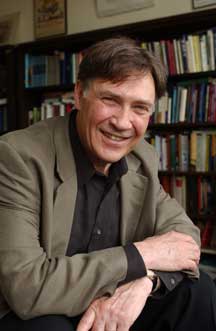
Press Play to hear Elaine Wynne who is a clinical psychologist speaks on uses healing stories with children on the Art of Storytelling with Brother Wolf.
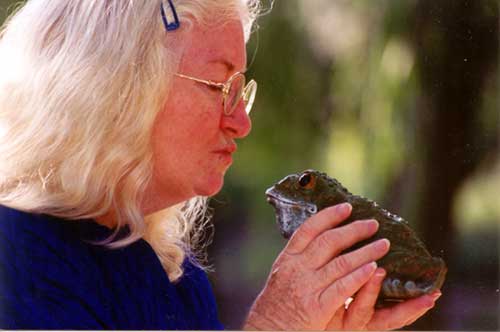
Elaine Wynne was a Storyteller first. Stories flowed freely around the kitchen table and from an Anishinabe/Irish man who lived on the farm where she grew up. She told stories to her young children and then in the early 70’s finished a degree in Storytelling and Image Development for Non-Profits. She began to perform as a storyteller and then in 1982 got a degree in the Psychology of Human Development (Storytelling and Healing as a main focus) and became a Licensed Psychologist.
She worked six years at Mpls. Children’s Medical Center and developed a story called “The Rainbow Dream”, used by children and adult cancer groups for many y ears. Later, her work using storytelling to teach self management to 2-5 year olds with asthma (with Daniel Kohen, M.D.) was published in the American Society for Clinical Hypnosis, and in numerous medical and psychological journals in Europe. Research on using stories and games as teaching methods showed significant reduction in emergency clinic and hospital visits over a two year period.
Elaine has performed and taught storytelling (and storytelling as a healing art) in Norway, Sweden, England, Ecuador, Japan, and Singapore, as well as in numerous places around Minnesota and the US. Last year, she presented a performance workshop at the 12th annual Pediatric Emergency Management of Humanitarian Disasters in Cleveland. She won Grand Prize with her husband (Storyteller Larry Johnson) at the Tokyo Video Festival for a storied exchange between children in St. Paul and London. She and Larry conduct and teach about Cousin Camp which they developed with their 13 grandchildren.
Press Play to hear Loren Niemi who was interviewed by Eric Wolf on Honoring Elders and Apprentices on the Art of Storytelling with Brother Wolf.
Loren Niemi writes… I’ve been a storyteller for 30 plus years and yet in so many ways I feel like a beginner learning how to do now, what I learned how to do then. It is “LOL” a very “Zen and now” approach to storytelling: beginner’s mind.
At this point in time, I understand clearly and fondly what a gift I received when I came to storytelling. The gift of generous mentors – specifically, Ken Feit and Rueven Gold – who took a “Zen and now” approach offering friendship, access, who posed and (sometimes) answered questions, encouraged and gave permission for me to find and develop my own voice rather than adopt theirs. They welcomed me wherever they were telling and often made space for me to tell a story at those gatherings.
They were prolific in suggesting, cajoling, handing me books and lists of books to read that would ground me in the storytelling traditions. It is one of the laments I have about a significant portion of those coming into storytelling now, that they do not Read more »
Press Play to hear David Novak who was interviewed by Eric Wolf on storyteller’s compass using narrative as guide on the Art of Storytelling with Brother Wolf.
“I heard telephones, opera house, favorite melodies
I saw boys, toys, electric irons and T.V.’s
My brain hurt like a warehouse, it had no room to spare
I had to cram so many things to store everything in there”
David Bowie, Five Years
I’m dreaming about a legless blind man when the radio alarm wakes me. In the short time it takes me to crawl to the bureau to turn off the radio (an arrangement designed to get me out of bed) I hear the DeeJay tell me that 5% of men surveyed admitted to wearing women’s underwear. I drift to the kitchen to feed the cat and dog and pour the coffee and juice. I go to the front door to collect the morning paper which informs me of the multimillion dollar judgement against O.J. and of an area magnet school which teaches children how to play the bagpipes. By the time I step back inside, my son is awake and Darkwing Duck is “getting dangerous” on the TV. I’ve been awake for less than 30 minutes and already I’m drowning in a sea of information, images and stories.
The day is far from finished. Everything is far from finished. I feel like my life is in the hands of an insomniac channel-surfer: unfinished stories in constant collision with one another adding up to one story: life today. It is all so scatterbrained. I worry: what am I adding to the noise as a voice telling stories in the thick of all this? Who am I to enter the fight for everyone’s attention? What is the point of storytelling in the technologically determined culture of today?
Exo-Brain
Technology enhances us: clothes enhance skin, glasses enhance eyes, wheels enhance walking. Such enhancements extend our physical bodies outward. Our techno-bodies can “see,” “hear,” and “reach” farther than our bio-bodies. We technologically express our Read more »
Press Play to hear Janice M. Del Negro who was interviewed by Eric Wolf on revising feminist folk-tales: naming the women. on the Art of Storytelling with Brother Wolf.
Dr. Janice M. Del Negro writes
When Eric and I talked about a topic for this interview, he asked me what was I passionate about? I am passionate about naming the women.
That being said, I was reluctant to use the word “feminist” in the title of this podcast. The word “feminist” is a trigger word that elicits, in many people, a strong emotional response. Since I agree with Mark Twain – “the difference between the right word and the almost-right word is the difference between the lightning and the lightning-bug”- the choice of the word “feminist” was problematic, because nearly everyone has a distinct personal definition of that particular word. Eric bypassed that concern, however: “people will search ‘feminist’ online,” he said to the library school professor. So here we are, “Revisioning the Feminist Folktale,” and I am not sure that two people on the planet have the same definition of what “feminist” means, never mind folktale, or oral tradition. So I’ll stick to passion.
I am passionate about retelling folktales. I am passionate about excavating old tales, tales that have already survived for centuries, for emotional truths that resonate with contemporary listeners. There is no definitive version of a folktale, no “original”; we can point to Read more »
Press play to hear Elizabeth Ellis who was interviewed by Eric Wolf on the relationship between Storytelling and the Development of Ethical Behavior on the Art of Storytelling with Brother Wolf on Wednesday, Dec. 3 at 8pm.
Elizabeth Ellis Writes…
If I had a nickel for every time someone (attorney, state trooper, loan officer, IRS agent) has made fun of me because I told ’em I am a storyteller, I could take us all out to dinner. At a nice place. With tablecloths. Because often the public perception of storytelling is that it is fluff and foolishness. Well, we storytellers know better, and we have survived an entire movement of Back to the Basics and Almighty State Testing. What the left brain-ers don’t realize is there is another entire level of education far more basic to being human than the 3 R’s will ever be. The most basic things about being human come from the right side of the brain, not the left. Chief among them is the ability to make ethical decisions. I am not talking about Read more »
Fill out the form and press play to hear Charlotte Blake Alston speak on breaking barriers through storytelling on the Art of Storytelling with Brother Wolf.
Tired of the tin sound?
Purchase a HQ Mp3 File of Interview #069
Charlotte Blake Alston
[wp_eStore:product_id:90:end] for $2.23
Breaking Barriers using Storytelling
Charlotte Blake Alston writes… My introduction to literature and the planting of seeds that later bloomed into storytelling, came in the 1950’s. In the midst of a social, political and cultural climate that suggested that my family and community were devoid of intellect, history or culture, my father began reading to me the literary diamonds and jewels that came from within our culture. Somewhere around 6 years old, my father read out loud the words of James Weldon Johnson, Paul Laurence Dunbar, Gwendolyn Brooks and Langston Hughes. My father relished and touted the genius of these writers. He handed me the Complete Poems of Paul Laurence Dunbar, selected a poem for me to memorize and launched me, as a child, onto a spoken word path. Numerous church banquets, teas and special community events were staging grounds for “a reading by Miss Charlotte Blake”.
I’ll share some memories of that time and fast-forward to the place where those germinating seeds and my experience in an independent school crossed paths with storytelling and an Read more »
Fill out the form and press play to hear Jack Zipes the preeminent writer about and translator of fairytales appear on the Art of Storytelling with Brother Wolf.
Jack Zipes in the Flesh.
Tired of the tin sound?
Purchase a HQ Mp3 File of Interview #060 Jack Zipes
[wp_eStore:product_id:81:end] for $2.23
Fairy Tales are still relevant to the children of today.
Jack Zipes writes… At their best, the storytelling of fairy tales constitute the most profound articulation of the human struggle to form and maintain a civilizing process. They depict metaphorically the opportunities for human adaptation to our environment and reflect the conflicts that arise when we fail to establish civilizing codes commensurate with the self-interests of large groups within the human population. The more we give into base instincts – base in the sense of basic and depraved – the more criminal and destructive we become. The more we learn to relate to other groups of people and realize that their survival and the fulfillment of their interests is related to ours, the more we might construct social codes that guarantee humane relationships. Fairy tales are uncanny because they tell us what we need and they unsettle us by showing what we lack and how we might compensate for lack.
Fairy tales hint of happiness. This hint, what Ernst Bloch has called the anticipatory illumination, has constituted their utopian appeal that has a strong moral component to it. We do not know happiness, but we instinctually know and feel that it can be created and perhaps even defined. Fairy tales map out possible Read more »


 Episode List, Healing Storytelling, Storytelling in Community | Brother Wolf |
  April 10, 2009 5:55 pm |
  Comments (2)